How We Choose Fabrics for Snazzyway Nightwear Collection
What fabrics does Snazzyway use for its nightwear collection?
Snazzyway chooses nightwear fabrics based on four factors — skin comfort, breathability, durability after washing, and design suitability. The most commonly used fabrics in our nightwear range are cotton, modal, satin, and microfiber — each selected for specific product styles and Indian climate conditions. Every fabric goes through a quality check at our in-house manufacturing unit in Haldwani, Uttarakhand before it reaches customers.
📋 Quick Summary
- Snazzyway has 12+ years of experience manufacturing women's nightwear and lingerie in India since 2014
- All fabric selection happens in-house at our Haldwani manufacturing studio — no middlemen involved
- We work with five primary fabric types: cotton, modal, satin, microfiber, and lace blends
- Climate suitability for Indian weather is a core factor in every fabric decision we make
- Our nightwear catalogue is also available to 4,000+ active sellers through our dropshipping platform
- This post covers the full process — from sourcing to final wash testing
Why Fabric Is the Most Important Decision in Nightwear
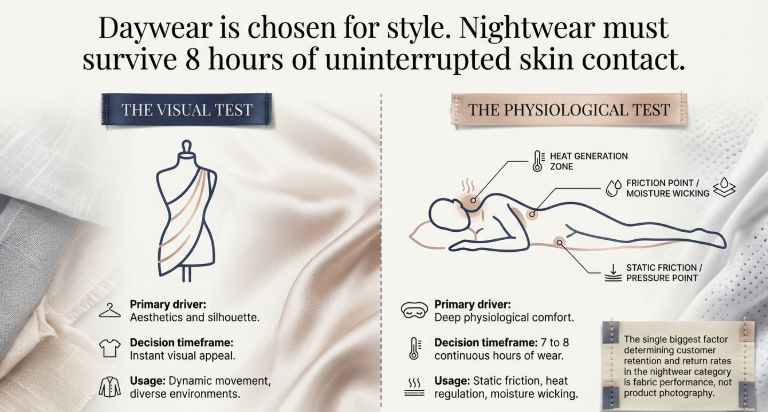
If you have ever bought a nightwear set that looked beautiful in product photos but felt uncomfortable the moment you wore it — scratchy fabric, heavy stitching, material that did not breathe — you know exactly why fabric selection matters more than anything else in this category.
At Snazzyway, we have been manufacturing women's lingerie and nightwear in India since 2014. Over these 12+ years, we have worked with more than 4,000 sellers across India, Europe, and the USA. That means millions of end customers have worn our products. And the single biggest factor that determines whether a customer loves a product or asks for a return? The fabric.
Daywear is about style. Nightwear is about comfort. That one difference changes everything about how we approach fabric selection. A customer buying a formal dress is primarily thinking about how it looks. A customer buying nightwear is thinking about how it will feel against her skin for 7 to 8 hours of sleep.
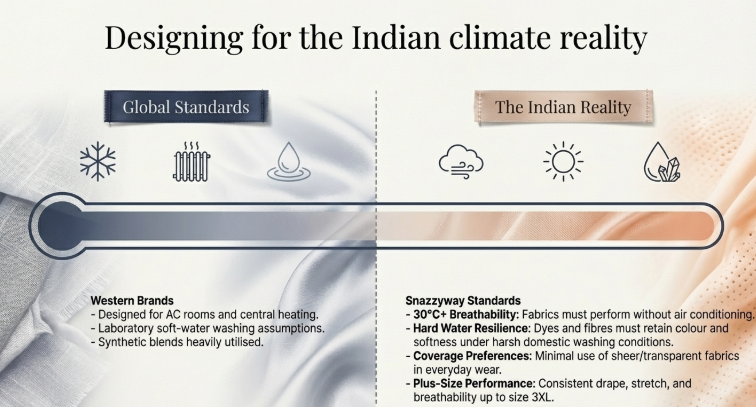
In India, this challenge is even larger. Our climate varies dramatically — humid coastal summers, cold Himalayan winters, unpredictable monsoon seasons. A fabric that works perfectly in Chennai in June can feel completely wrong in Delhi in December. So we do not apply one nightwear fabric standard across the board. We design fabric choices around real Indian weather and real Indian bodies.
The 5 Fabrics We Use in Snazzyway's Nightwear Collection — And Why
Here is an honest breakdown of every major fabric type in our nightwear collection, the reason we use it, and which customer it suits best.
| Fabric | Best For | Climate Suitability | Typical Products | Rating |
|---|---|---|---|---|
| Pure Cotton | Everyday comfort, sensitive skin | Year-round in India | Kurta sets, full-sleeve nightwear | ⭐⭐⭐⭐⭐ |
| Modal | Softness, drape, premium feel | All seasons, especially humid | Slip dresses, short nightgowns | ⭐⭐⭐⭐⭐ |
| Satin | Luxury look, gifting, occasions | Best for winters and AC rooms | Bridal sets, Valentine's range | ⭐⭐⭐⭐ |
| Microfiber | Shape retention, colour richness | Moderate — cooler climates | Babydolls, short sets | ⭐⭐⭐⭐ |
| Lace Blend | Design detailing, occasion wear | Best as trim, not full fabric | Lace nightgowns, lingerie sets | ⭐⭐⭐ |
Pros and Cons of Each Fabric Type
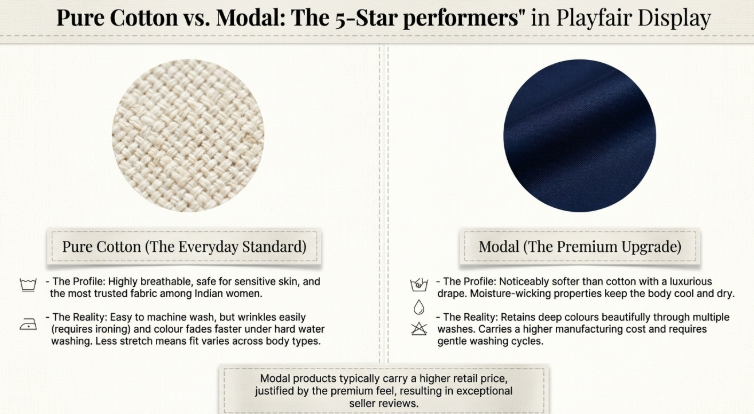
Pure Cotton
Pros
- Breathable — ideal for Indian summers and humid regions
- Safe for sensitive skin, no irritation with regular wear
- Easy to machine wash and maintain at home
- Trusted fabric — most Indian women already prefer it
- Works as everyday wear, not just special occasions
Cons
- Wrinkles easily — needs ironing after washing
- Less premium-looking in product photos compared to satin or modal
- Colour fades faster over repeated washing with hard water
- Less stretch — fitting can vary across different body types
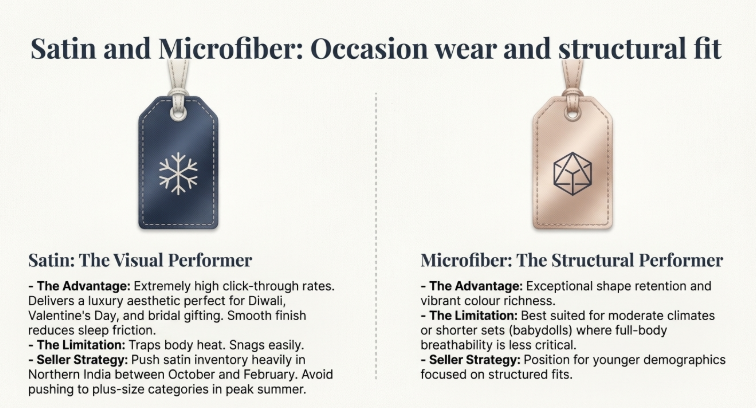
Modal Fabric
Pros
- Extremely soft — noticeably softer than regular cotton
- Drapes beautifully — great for both product photos and real wear
- Retains colour well even after multiple washes
- Moisture-wicking — keeps the body cool and dry through the night
- Lightweight and luxurious without being heavy
Cons
- Higher manufacturing cost than cotton
- Requires careful washing — not always suitable for rough machine cycles
- Less structure — not ideal for every design type
Satin
Pros
- Looks luxurious in photos — high click-through rate for sellers
- Excellent for gifting products, bridal sets, and seasonal collections
- Smooth finish reduces friction against skin during sleep
- High perceived value — customers feel they are buying something premium
Cons
- Traps body heat — not suitable for humid Indian climates
- Slippery feel — some customers find this uncomfortable
- Can snag easily — clear care instructions are essential
- Not recommended for plus-size categories in summer months
Our 6-Step Fabric Selection Process
Choosing a fabric is not a single decision made in a meeting. At Snazzyway, it is a structured six-step process that every fabric goes through before it enters our production line.
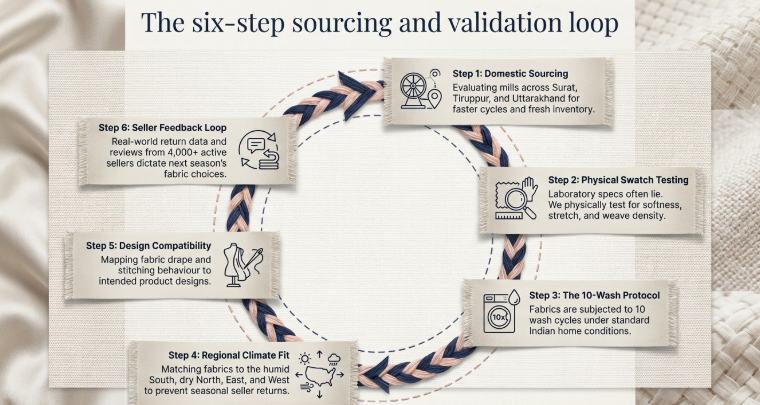
| Step | What We Do | Why It Matters |
|---|---|---|
| 1. Sourcing | Evaluate fabric suppliers across India — primarily Surat, Tiruppur, and local Uttarakhand mills | Domestic sourcing means faster production cycles and fresher inventory |
| 2. Swatch Testing | Physical samples tested for softness, stretch, and weave density | Specs on paper often differ from real feel — we always test physically |
| 3. Wash Test | Fabrics washed 10 times under standard home conditions and re-evaluated | We want to know how the product looks after months of use, not just on day one |
| 4. Climate Fit | Match fabric to Indian regional climate profiles — North, South, East, West | Reduces return rates and seasonal complaints from sellers |
| 5. Design Compatibility | Fabric evaluated against intended product design — drape, stitching behaviour, print clarity | Some designs only work with specific fabrics — prevents expensive production errors |
| 6. Seller Feedback Loop | Top sellers in our network share customer feedback, which informs future fabric decisions | Real-world data from 4,000+ sellers is more valuable than any lab test |
📍 From Our Manufacturing Floor, Haldwani
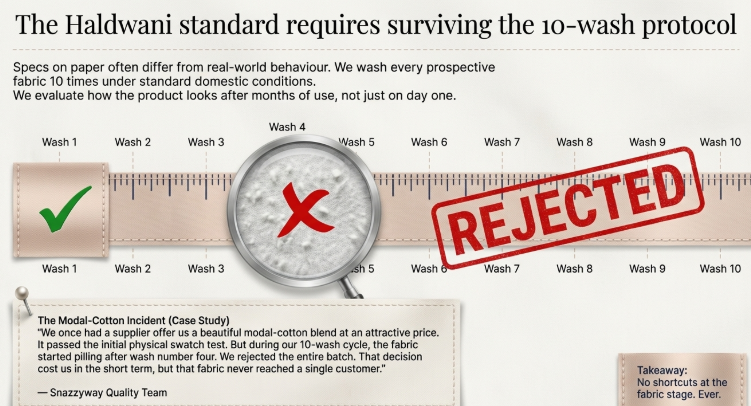
"We once had a supplier offer us a beautiful modal-cotton blend at a very attractive price. It passed the initial swatch test. But during our 10-wash cycle, the fabric started pilling after wash number four. We rejected the entire batch. That decision cost us in the short term, but the fabric never reached a single customer. This is how we have maintained product quality across 12+ years — no shortcuts at the fabric stage, ever." — Snazzyway Quality Team
🔍 Snazzyway Insight
In our early years, we launched a beautiful satin nightwear set that sold very well visually but had higher-than-average returns from sellers based in southern India. After speaking directly with our seller network, the feedback was consistent — satin traps heat and feels uncomfortable during humid summers, even when the product looks premium.
That single lesson reshaped how we now think about fabric categorisation. Products in our catalogue are now matched to seasonal and regional suitability, which has significantly reduced returns and improved seller ratings from climate-sensitive regions. This kind of operational learning only comes from being in the business long enough — and from having a seller network large enough to give you honest, real-world data.
What Makes Indian Nightwear Different From Global Standards
A lot of nightwear sold globally — particularly from European and American brands — is designed for air-conditioned bedrooms with central heating. Indian homes are different. Most Indian women sleep across a wide range of temperatures throughout the year, and many prefer fabric that performs well without air conditioning.
This shapes our fabric choices in several specific ways:
Higher breathability threshold. We require fabrics to maintain breathability even at 30°C+ temperatures. This rules out several synthetic options that sell well in Western markets but fail in Indian summers.
Colour retention in hard water. Most Indian households wash clothes with hard water. Fabrics must retain colour quality under these real conditions, not just laboratory soft-water testing.
Coverage preferences. Indian customers generally prefer coverage in nightwear. Our fabric choices reflect this — we rarely use fully sheer or transparent fabrics in our everyday nightwear range. That category stays within our designer lingerie and occasion collections.
Plus-size performance. Fabric must perform consistently across size ranges. A fabric that works beautifully at size S can behave very differently at size 3XL — especially in terms of stretch, drape, and breathability. Our testing includes fit evaluation across size ranges, not just a standard sample size.
🔍 Snazzyway Insight
Data collected from our seller network shows that nightwear products made with modal or soft cotton consistently receive 4.5-star and above ratings across Indian marketplaces including Amazon and Meesho. Satin-based products perform best in northern India during winter months (October to February) and in the gifting category throughout the year.
This kind of seller-sourced intelligence — gathered from 4,000+ active sellers across India — is what allows us to make fabric decisions that directly improve customer satisfaction and reduce return rates across the seller network.
Fabrics We Have Stopped Using — And Why
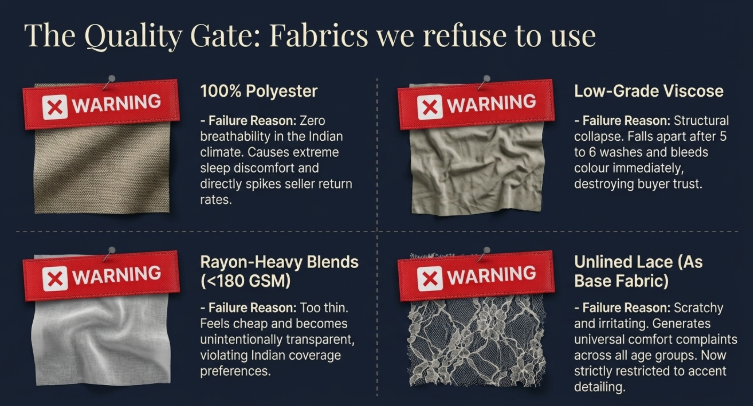
Transparency is something we take seriously. Here are fabrics we have tested in the past and moved away from, and the honest reasons behind each decision.
| Fabric | Why We Stopped Using It |
|---|---|
| 100% Polyester | Poor breathability in Indian climate, higher return rates, consistent customer complaints about discomfort during sleep |
| Low-grade Viscose | Falls apart after 5 to 6 washes, colour bleeds in first wash — creates a serious trust issue for resellers |
| Rayon-heavy blends below 180 GSM | Too thin for most Indian women's preference — feels cheap, transparent in unintended areas |
| Unlined Lace as primary fabric | Comfort complaints across all age groups — now used only as trim or accent detailing, never as the main fabric |
How Our Fabric Standards Directly Benefit Dropshipping Sellers
If you are a reseller, this section matters to you specifically.
When you sell nightwear through our platform, you are not just listing products. You are putting your store's reputation behind the quality of every item we manufacture and ship. A bad fabric experience leads to returns, negative reviews, and lost customers — none of which you can recover easily, especially when you are building a brand from scratch.
This is exactly why we are so rigorous about fabric decisions. Every product in our catalogue has gone through the six-step testing process described above. When we say a product is soft-cotton nightwear, it has completed 10 wash cycles. When we say modal, it has been tested for drape and breathability at Indian temperatures.
Our sellers consistently report that nightwear delivers some of the lowest return rates in their entire stores — precisely because the fabric quality matches what their customers actually experience, not just what looks good in a product photo.
If you want to build a nightwear-focused reselling business without managing any inventory, explore how Snazzyway's dropshipping platform works — India's leading women's clothing and lingerie dropshipping supplier since 2014, trusted by 4,000+ active sellers. You get access to our full nightwear catalogue with the same fabric standards described in this post, shipped directly to your customers under your brand name.
What Our Sellers Say About Snazzyway Nightwear Fabric Quality
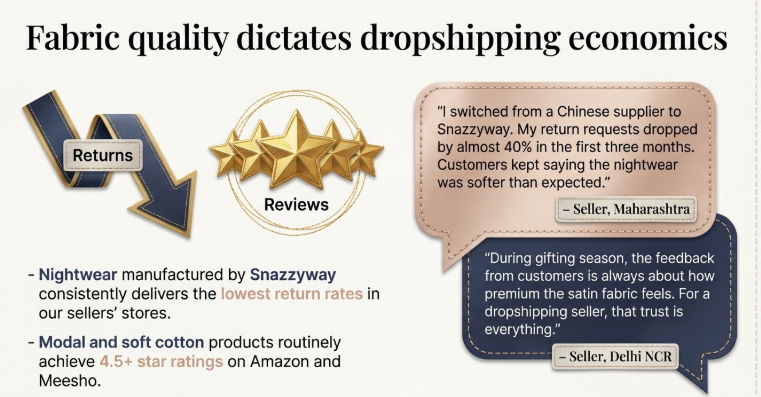
"I switched from a Chinese supplier to Snazzyway two years ago. The biggest difference I noticed was in the fabric quality. My return requests dropped by almost 40% in the first three months. Customers kept saying the nightwear was softer than expected — that is feedback I had never received before." — Seller, Maharashtra
"I specifically sell Snazzyway satin sets during the gifting season — Diwali, Valentine's Day, anniversaries. The feedback from customers is always about how premium the packaging and fabric feels. For a dropshipping seller, that kind of trust from end customers is everything." — Seller, Delhi NCR
The growth in online nightwear sales is tied directly to Indian consumers becoming more comfortable buying intimate products online. Fashion ecommerce in India has grown 3x faster than offline retail in recent years — and nightwear is consistently one of the fastest-growing subcategories within that trend.
Tips for Sellers: How to Use Fabric Information to Increase Conversions
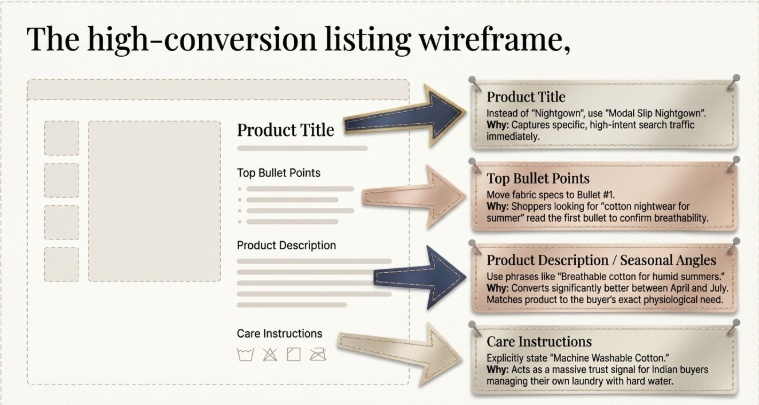
Here is something most sellers miss — mentioning fabric details in your product listings directly increases conversion rates. Buyers searching for "cotton nightwear for summer" or "modal nightgown India" are specific, high-intent shoppers. If your listing clearly mentions the fabric, you capture this search traffic and earn customer trust immediately.
- Add fabric type to your product title — "Modal Slip Nightgown" outperforms just "Nightgown" in search rankings
- Mention care instructions — "machine washable cotton nightwear" is a trust signal buyers actively look for
- Use seasonal angles — "breathable cotton nightwear for summer" converts significantly better between April and July
- For Amazon listings, place fabric-specific bullet points near the top of your product description
If you are selling on Amazon India, our detailed guide on how to sell lingerie on Amazon India in 2026 covers listing optimisation including fabric-based keyword strategies specific to the Indian marketplace.
Frequently Asked Questions
Q1. What is the best fabric for nightwear in Indian summers? Pure cotton and modal are the best choices for Indian summers. Both fabrics are breathable, moisture-absorbing, and do not trap body heat. Satin and microfiber, while visually premium, tend to feel warmer and are better suited for winter use or air-conditioned rooms.
Q2. Does Snazzyway use the same fabric for all its nightwear products? No. Different nightwear styles use different fabrics based on the product's intended purpose and season. Everyday sleepwear uses cotton or modal. Gift sets and bridal nightwear often use satin. Babydolls and short sets typically use microfiber with lace accents. We choose fabric per product design, not per collection.
Q3. Are Snazzyway fabrics tested for skin safety? Yes. All fabrics go through physical testing at our in-house Haldwani manufacturing unit. We do not use chemical-heavy dyes or low-grade blended fabrics known to cause skin irritation. Our products are designed to be safe for direct skin contact during extended nightly wear.
Q4. Can I request specific fabric types as a dropshipping seller? Our standard catalogue already covers a range of fabric types across all nightwear subcategories. For bulk or custom orders, Snazzyway offers made-to-order and private label manufacturing options where specific fabric preferences can be discussed directly with our production team.
Q5. Is modal fabric worth the higher price compared to cotton for resellers? For resellers, yes — modal products typically carry a higher selling price and are perceived as premium by buyers. The slightly higher cost is reflected in better product photography, higher customer satisfaction ratings, and lower return rates. For accessible everyday price points, cotton remains the most reliable and consistent choice.
Q6. How often does Snazzyway update its nightwear fabric selections? We review fabric suppliers and introduce new fabric options on a seasonal basis — approximately every quarter. New fabric introductions go through our standard six-step testing process before entering the production line. Sellers on our platform receive early access to new arrivals through the Snazzyway Fly dashboard.
You must login to post a comment.

Related Articles
You may also like these posts

What 10,000+ Reviews Taught Us in 12 Years
Aug 09, 2026
Why We Rebuilt the Snazzyway Review System
Aug 09, 2026
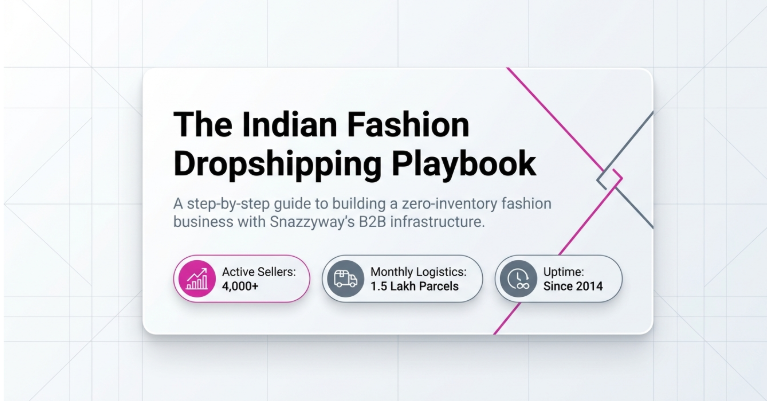
How Snazzyway Works — A Complete Guide for New Dropshipping Sellers in India
Mar 30, 2026
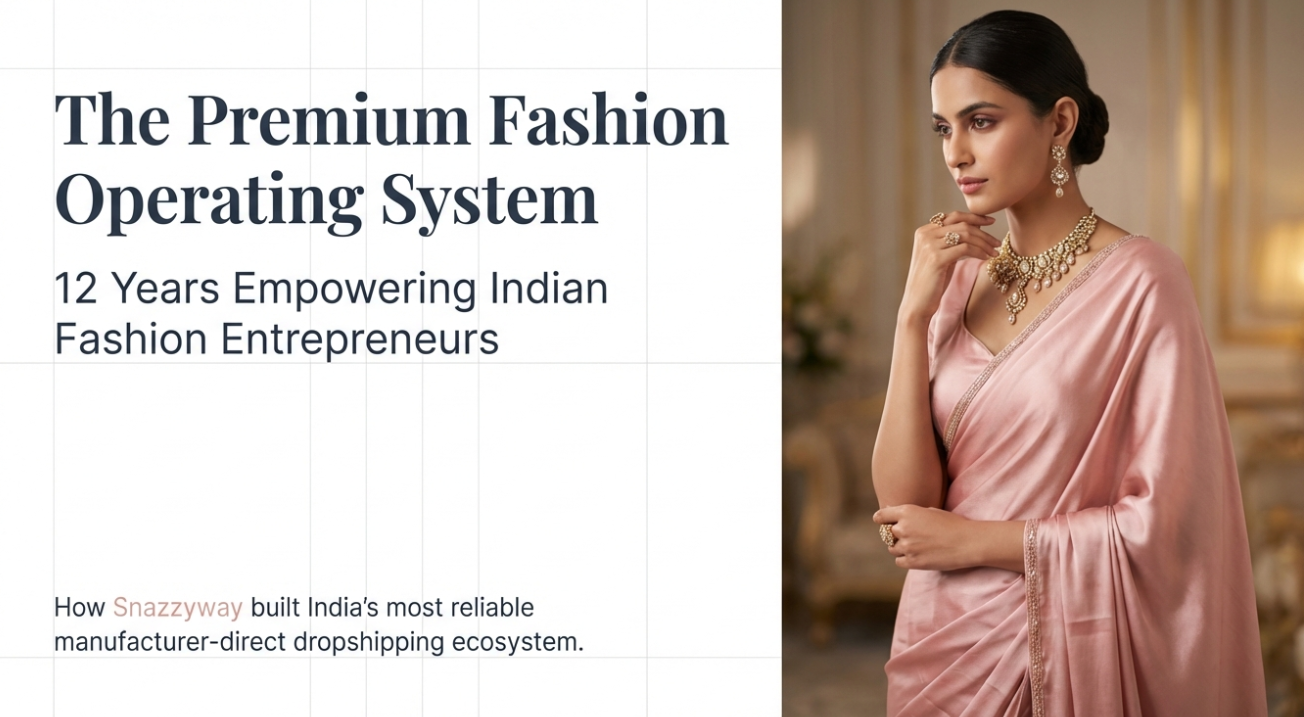
How Snazzyway Has Supported Indian Fashion Sellers for 12 Plus Years
Mar 30, 2026
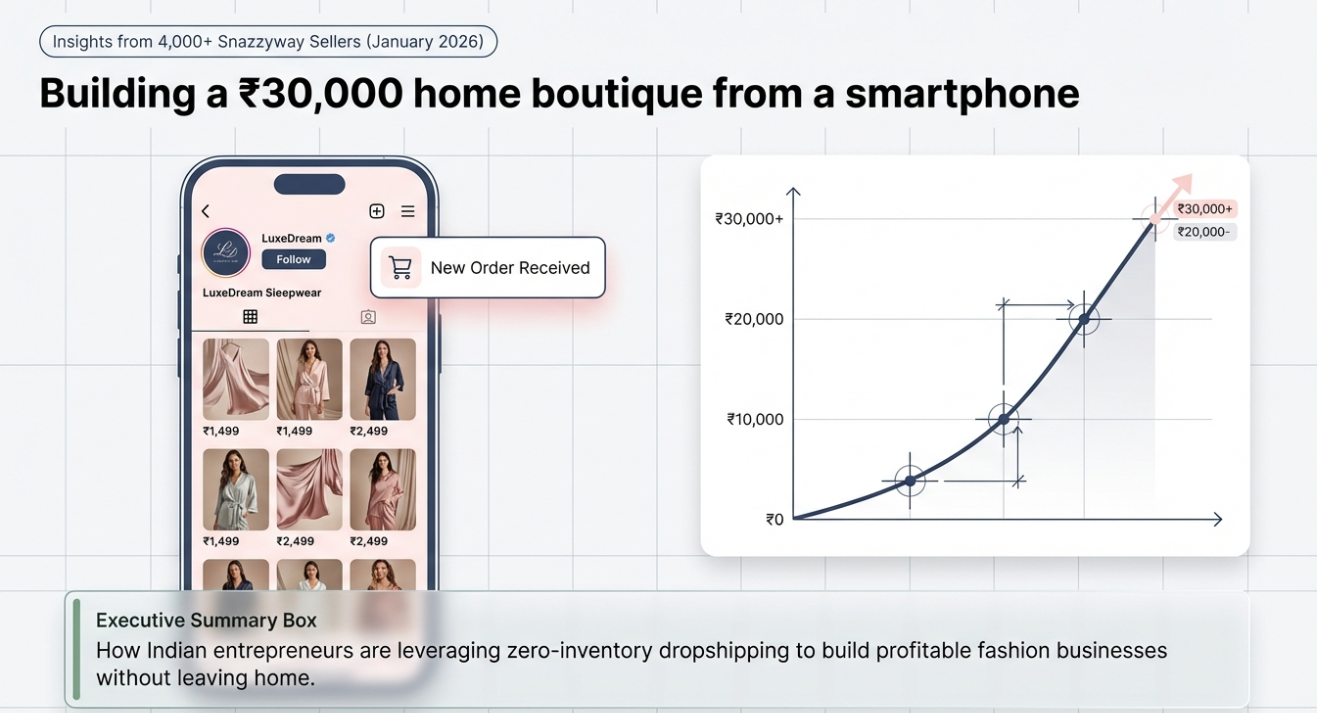
How Indian Housewives Are Earning ₹30,000 a Month Selling Online From Home
Mar 30, 2026