Why We Rebuilt the Snazzyway Review System
A few months ago, we sat down and looked hard at something most e-commerce brands never really question: our own review section. Not the design of it, not the star icons or the layout — the actual trust behind it. Were the reviews on Snazzyway genuinely helping customers, or had the system quietly become something else?
What we found wasn't disastrous, but it wasn't good enough either. And in a category like ours — where a customer can't try before they buy, and where the difference between "true to size" and "runs small" can be the difference between a great purchase and a returned one — "not good enough" isn't acceptable. So we rebuilt it. Here's the honest story of why, what we changed, and what shopping through Snazzyway reviews looks like now.
The problem we didn't want to admit
Like most growing online stores, our review system started simple: customers could rate a product, leave a comment, maybe upload a photo. It worked fine when we were small. But as Snazzyway grew, three problems crept in that we didn't notice until we went looking for them.
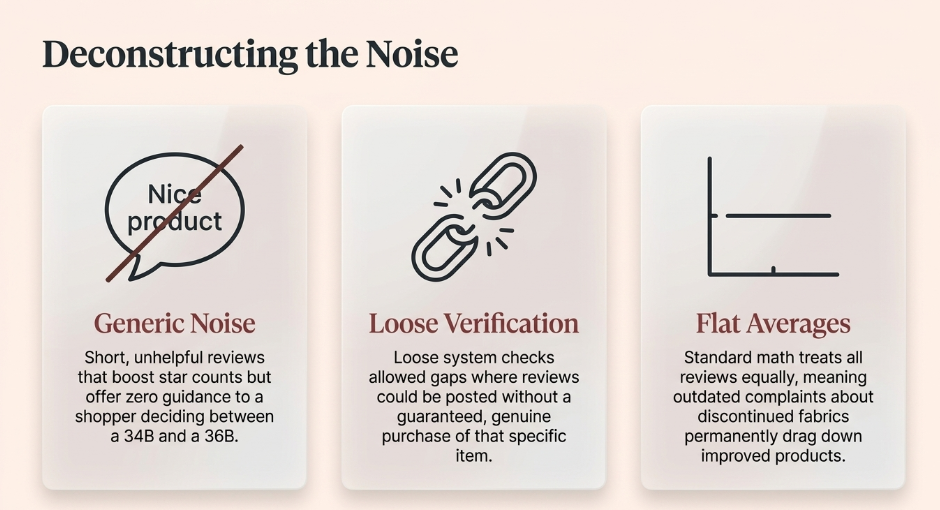
First, review quality was drifting toward noise. A growing share of reviews were short, generic, and unhelpful — "nice product," "good quality," five stars, nothing else. Reviews like this technically count toward a star rating, but they don't actually help anyone deciding between a size 34B and a 36B, or wondering if a fabric runs sheer.
Second, we couldn't fully guarantee every review came from a real purchase. Our older system checked for this loosely, but there were gaps — enough that a small number of reviews almost certainly weren't from genuine customers. Even a small percentage of untrustworthy reviews is enough to poison the well, because once a shopper suspects any review might be fake, they start doubting all of them.
Third, our star rating was a flat average. It didn't account for how old a review was, or whether a product's fabric supplier or production batch had since changed. That meant a handful of complaints from a discontinued fabric run two years ago could drag down a product that had since been completely fixed — while, in the opposite direction, an early wave of enthusiastic reviews could mask a more recent quality dip. Neither situation is fair to shoppers trying to make a real-time decision.
None of these problems were dramatic on their own. But stacked together, they meant our review section was slowly losing the thing that made it valuable in the first place: being something customers could actually rely on.
What "rebuilding" actually meant
We didn't want to just patch the surface — add a filter here, delete a few suspicious reviews there. We wanted a system built around one question: if a customer reads this review, can they trust that it reflects a real experience with this exact product, recently?
That question shaped everything we changed.
1. Purchase verification, tightened
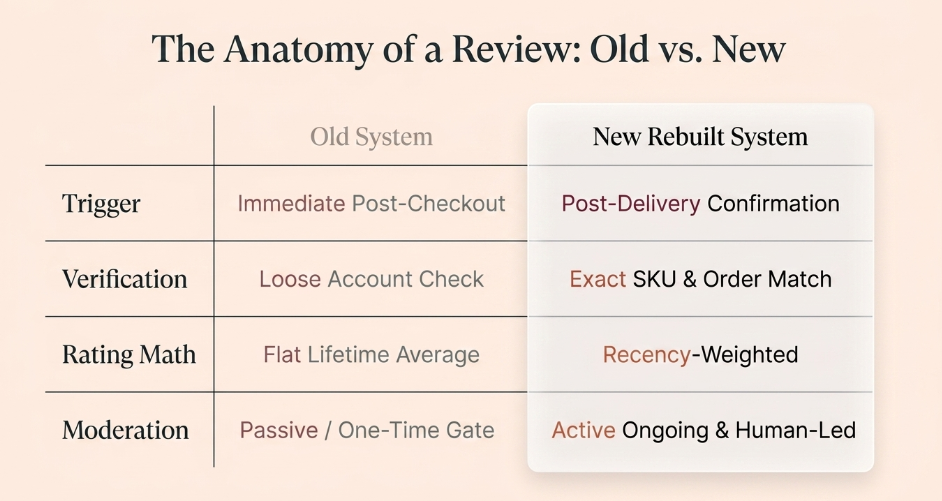
Every review is now tied directly to a completed, delivered order — not just an account that has purchased something from Snazzyway at some point, but the specific product being reviewed. This closed the biggest gap in our old system and is the single change we're most confident improved trust the most.
2. Recency-weighted ratings, not flat averages
Star ratings now weight recent, verified reviews more heavily than old ones. If a product's quality genuinely improves — a better elastic, a softer fabric batch, tighter stitching — that improvement shows up in the rating within a reasonable window, instead of being buried under years of older feedback. The reverse is also true: if quality dips, the rating reflects that quickly rather than staying artificially high on the strength of old five-star reviews.
3. Active, ongoing moderation — not just a one-time gate
Previously, moderation mostly happened once, at submission. Now it continues after a review is published. We monitor for patterns that suggest coordinated or incentivized reviews — a burst of near-identical five-star reviews posted within hours of each other, generic praise that reads like it was copy-pasted, accounts that only ever leave five-star reviews across unrelated products. None of these signals alone proves manipulation, but together they're a strong signal worth a manual look.
4. A real reporting loop that we actually act on
We rebuilt the Report function so that flagged reviews go to a human, not just an automated queue that silently does nothing. If enough shoppers are telling us a review looks off, we take that seriously — sometimes faster than our own systems catch it.
5. Clear, published guidelines
Maybe the least technical change, but one of the most important: we wrote down our full review policy and published it, instead of leaving it as an internal document nobody outside the company could see. If you want the complete rules — what's allowed, what gets removed, how ratings are calculated — we've laid all of it out on our Snazzyway Reviews & Community Guidelines page. Transparency was the whole point of this rebuild, so it didn't make sense to keep the rulebook private.
What this looks like in practice
If you've bought from Snazzyway before and are shopping again now, here's what's different day-to-day:
- You'll notice review prompts only appear after delivery is confirmed — not immediately after checkout, since we want reviews written from actual experience with the product, not just the buying process.
- Star ratings may shift slightly on some listings as older reviews get less weight and recent ones get more — this is expected and is the system working as intended, not a bug.
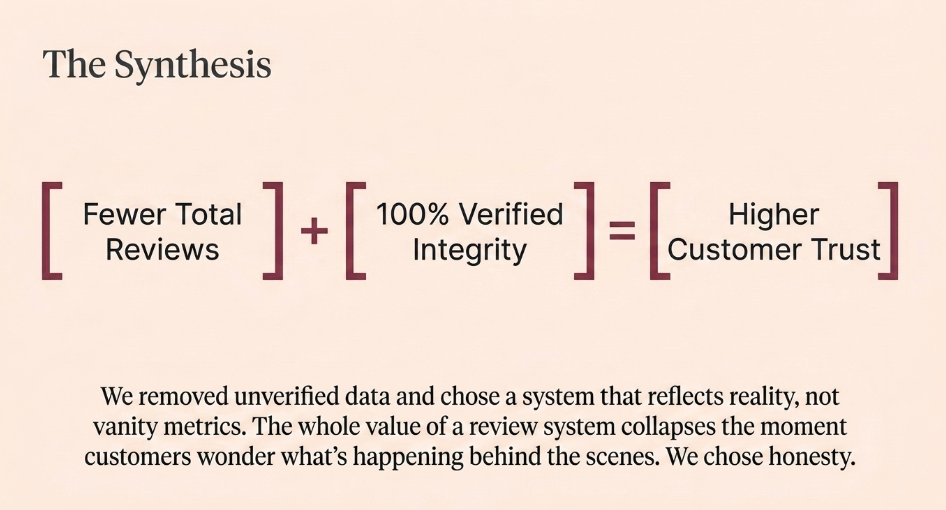
- You may see fewer total reviews on some products than before, because we removed a batch of reviews that didn't meet the tightened verification standard during the transition. Fewer, more trustworthy reviews are a trade we're happy to make.
- Reporting a review now gets a real response, typically reviewed by a person rather than sitting in an automated queue indefinitely.
Why we're telling you all this
We could have made these changes quietly and said nothing. Most companies do exactly that. But we think the whole value of a review system collapses the moment customers have reason to wonder what's happening behind the scenes. So instead, we're choosing to explain it: what was wrong, what we changed, and how it works now.
If a review system is worth having at all, it's worth being honest about — including admitting it wasn't perfect before. We'd rather tell you that directly than have you find out by noticing something felt off.
For the complete, ongoing policy — who can post a review, what gets removed, how star ratings are calculated, and how to report something that looks wrong — head over to our Snazzyway Reviews & Community Guidelines page. This blog post explains why we changed things; that page is the living document of how it works going forward, and we'll keep it updated as the system evolves further.
Thanks for reading this far, and thank you to everyone who's left an honest review on Snazzyway — good or bad. That's the whole system working exactly the way it's supposed to.
You must login to post a comment.
Table of Contents

Super Admin
Related Articles
You may also like these posts
What 10,000+ Reviews Taught Us in 12 Years
Aug 09, 2026
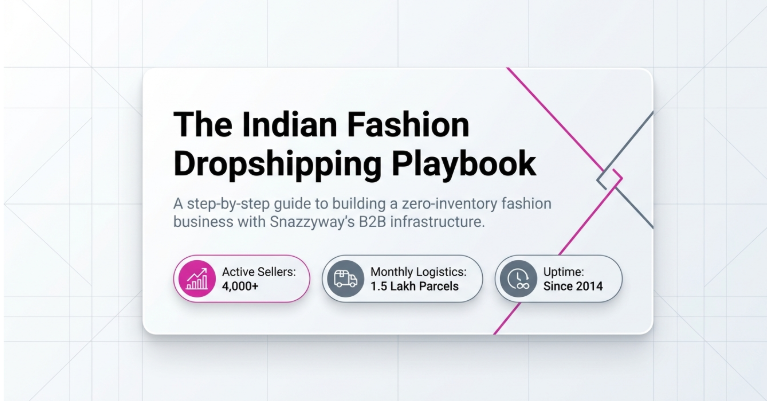
How Snazzyway Works — A Complete Guide for New Dropshipping Sellers in India
Mar 30, 2026

How Snazzyway Has Supported Indian Fashion Sellers for 12 Plus Years
Mar 30, 2026
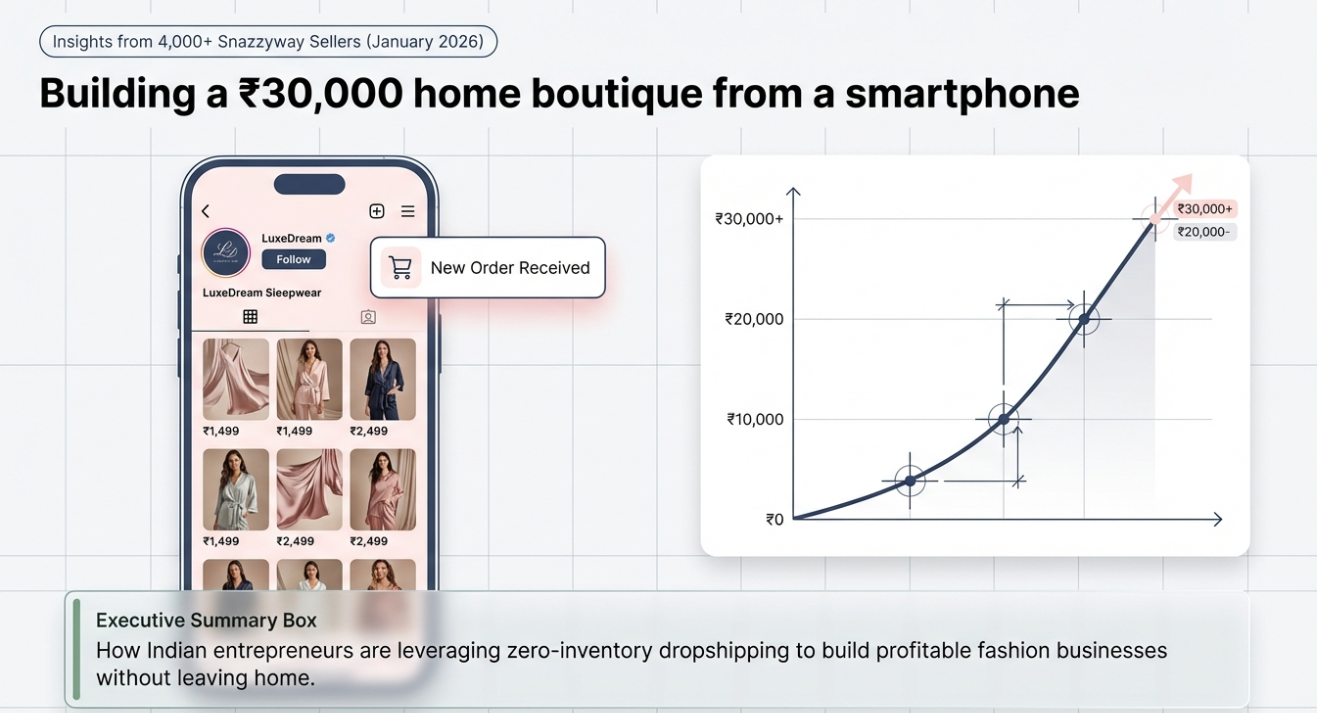
How Indian Housewives Are Earning ₹30,000 a Month Selling Online From Home
Mar 30, 2026

Why Women Fashion Is the Best Category to Sell Online in India Right Now
Mar 24, 2026