What 10,000+ Reviews Taught Us in 12 Years
We've written before about how we protect the integrity of Snazzyway reviews — why we rebuilt our review system and how we catch fake ones. This post is different. It's not about trust or moderation. It's about what happens once you actually sit down and read thousands of genuine reviews back to back — the patterns that emerge, the things customers keep telling us in their own words, and what we've quietly changed because of it.
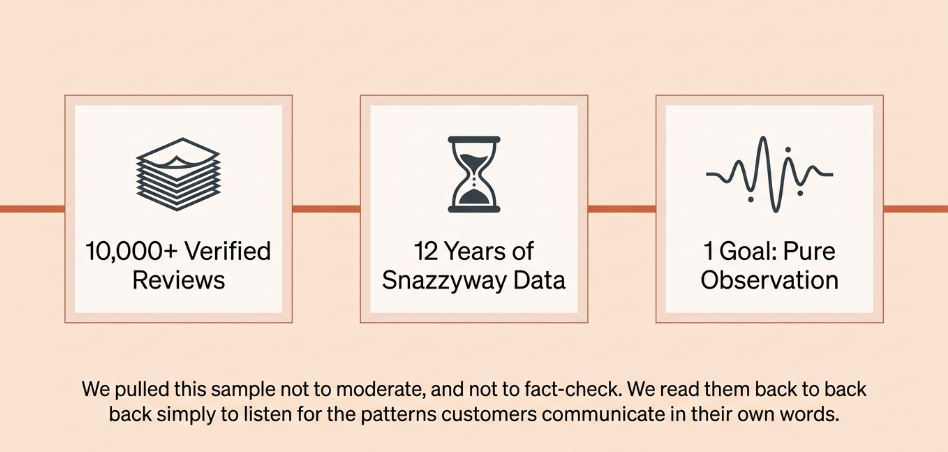
We did exactly that recently: pulled a large sample from over 10,000 verified reviews collected across our 12 years in business, and just read. Not to fact-check them, not to moderate them — to listen. Here's what stood out.
"True to size" is the phrase customers care about most
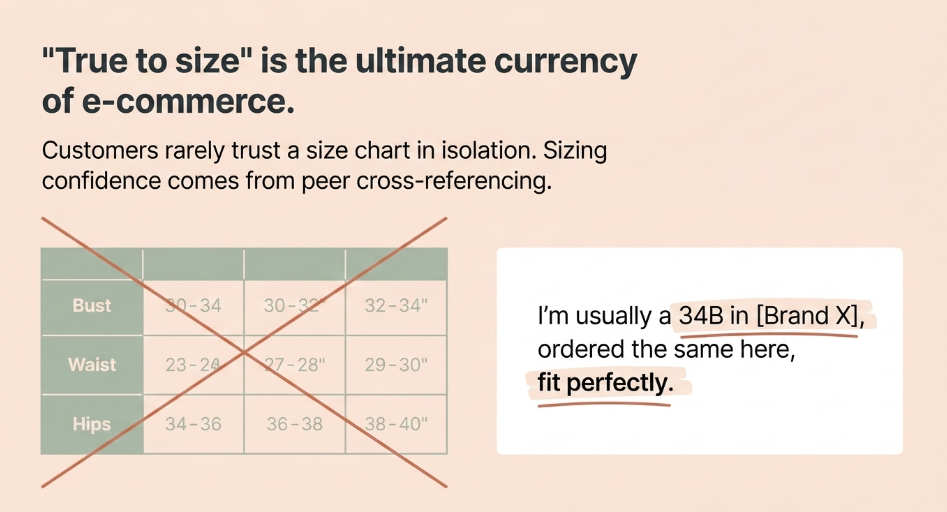
Across nearly every category, one theme dominated more than anything else: sizing confidence. Not "is this good quality" — that came up too, but less often than expected. What customers wanted to know, and what they most often told the next shopper, was simply: does this fit the way it's supposed to?
We noticed customers doing something helpful without being asked — comparing their Snazzyway size to what they normally wear in other brands. "I'm usually a 34B in [other brand], ordered the same here, fit perfectly" showed up in dozens of variations. This single pattern told us something concrete: shoppers don't fully trust a size chart alone. They trust another shopper's cross-brand comparison far more. It's part of why we've started encouraging reviewers to mention this specifically, and why you'll see it called out more often in review prompts going forward.
Fabric feel matters more than fabric name
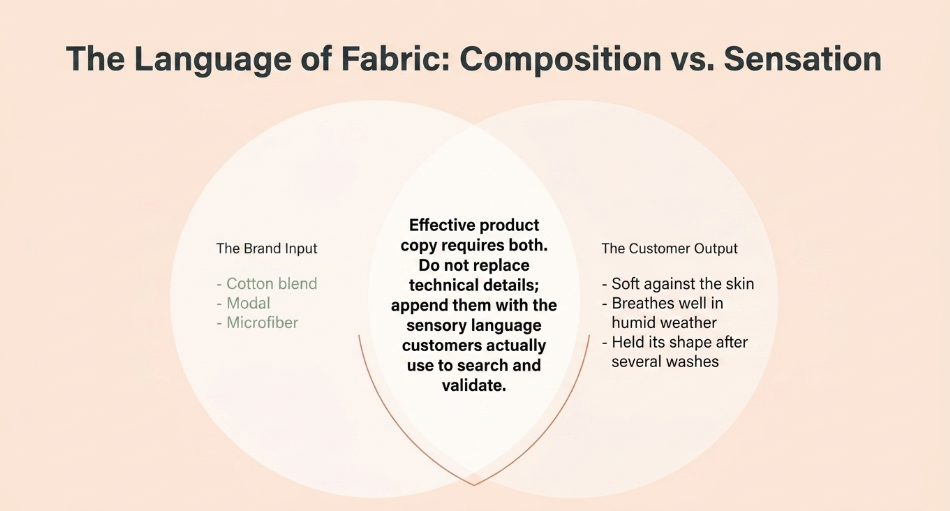
Product descriptions often list fabric composition — cotton blend, modal, microfiber — because that's the technically correct information to provide. But reading real reviews, customers rarely talk in those terms. They talk about how something feels: "soft against the skin," "doesn't feel scratchy after a full day," "breathes well even in humid weather," "held its shape after several washes."
This gap between how we describe fabric and how customers actually experience it was one of the more useful things we found. It's pushed us to think about product descriptions differently — not replacing the technical fabric details, but adding the sensory language customers actually use, since that's what future shoppers are scanning reviews for anyway.
The best reviews read like advice to a friend
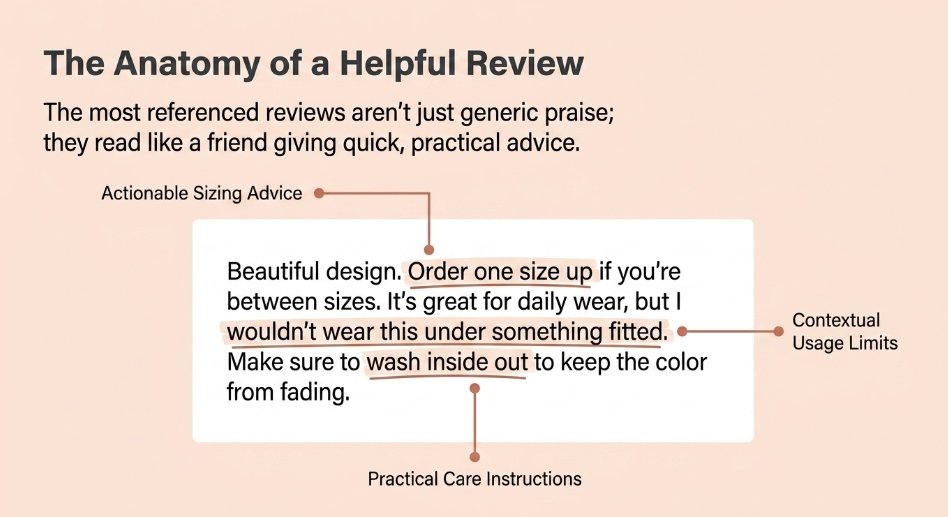
Some of the most helpful reviews we came across weren't structured like reviews at all — they read more like a friend giving quick, practical advice. "Order one size up if you're between sizes." "Great for daily wear but I wouldn't wear this under something fitted." "Wash inside out to keep the color from fading."
These kinds of reviews get referenced and found helpful by other shoppers far more often than generic praise, and there's a simple reason: they answer a question the reader actually has, rather than just stating an opinion. It's a good reminder — for us and for anyone leaving a review — that specificity is what makes feedback genuinely useful, not just positive.
Negative reviews are often the most valuable ones
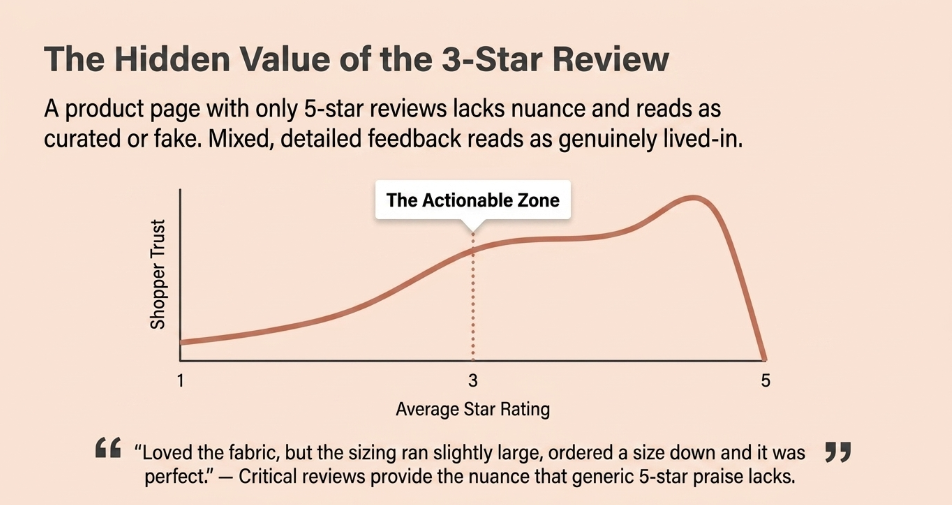
This one surprised us less than it probably should have: some of the single most useful pieces of feedback in our entire sample came from three-star reviews, not five-star ones. A three-star review with real detail — "loved the fabric, but the sizing ran slightly large, ordered a size down and it was perfect" — is often more actionable than a five-star review that just says "great!"
We don't treat critical reviews as something to minimize. If anything, reading through this sample reinforced that a product page with only five-star reviews and no nuance is often less trustworthy-looking to shoppers than one with a healthy mix, because it's the nuanced, mixed feedback that reads as genuinely lived-in rather than curated.
What we've actually changed because of this
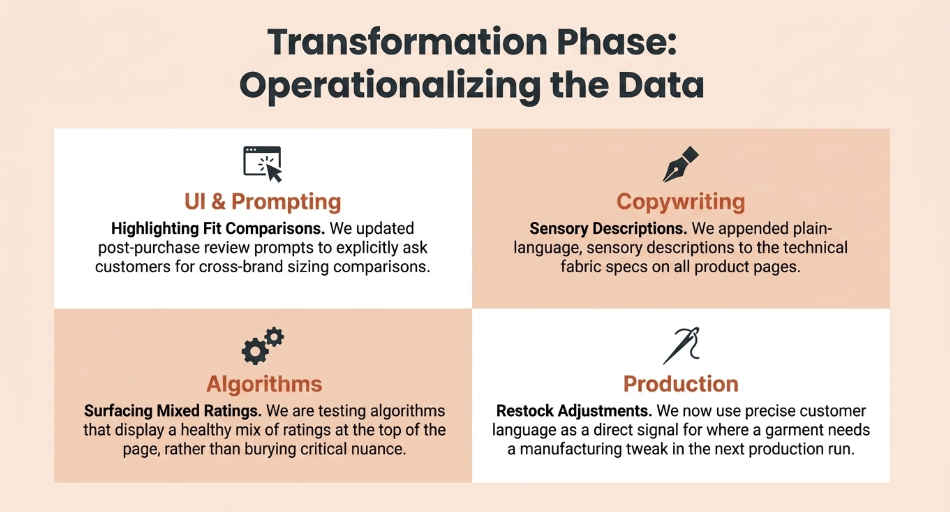
Reading through reviews at this scale wasn't just an interesting exercise — a few concrete things came out of it:
- We've started highlighting fit-comparison details in review prompts, since that's clearly the single most valuable piece of information for a shopper deciding between sizes.
- We're adding more sensory, plain-language fabric descriptions to product pages, alongside the technical composition details, based on the language customers use most.
- We're testing surfacing a mix of ratings rather than only the most positive reviews at the top of a product page, since that mix is part of what makes the review section feel genuinely trustworthy.
- We're paying closer attention to specific, detailed reviews when deciding what to restock or adjust in future production runs — customer language ends up being a surprisingly direct signal for where a product needs a small tweak.
Why we're sharing this instead of keeping it internal
This kind of review analysis is normally something companies do quietly, for their own product and marketing decisions, and never talk about publicly. We think that's a missed opportunity — both for transparency and honestly because it's genuinely interesting. Customers put real thought into the reviews they write, often more than they'd expect anyone to actually read closely. We wanted to show that we do.
If you've left a Snazzyway review, however short, there's a real chance it's part of exactly the kind of pattern we described above — shaping a product description, a sizing note, or how we think about what to make next. That's the actual value of a review section, beyond the star rating on any single page.
For the rules behind how reviews work — who can post, what we remove, and how ratings are calculated — that all lives on our Snazzyway Reviews & Community Guidelines page. This post was about something a little different: not the rules, but what we actually learned from listening.
You must login to post a comment.
Table of Contents

Super Admin
Related Articles
You may also like these posts
Why We Rebuilt the Snazzyway Review System
Aug 09, 2026
How Snazzyway Works — A Complete Guide for New Dropshipping Sellers in India
Mar 30, 2026
How Snazzyway Has Supported Indian Fashion Sellers for 12 Plus Years
Mar 30, 2026
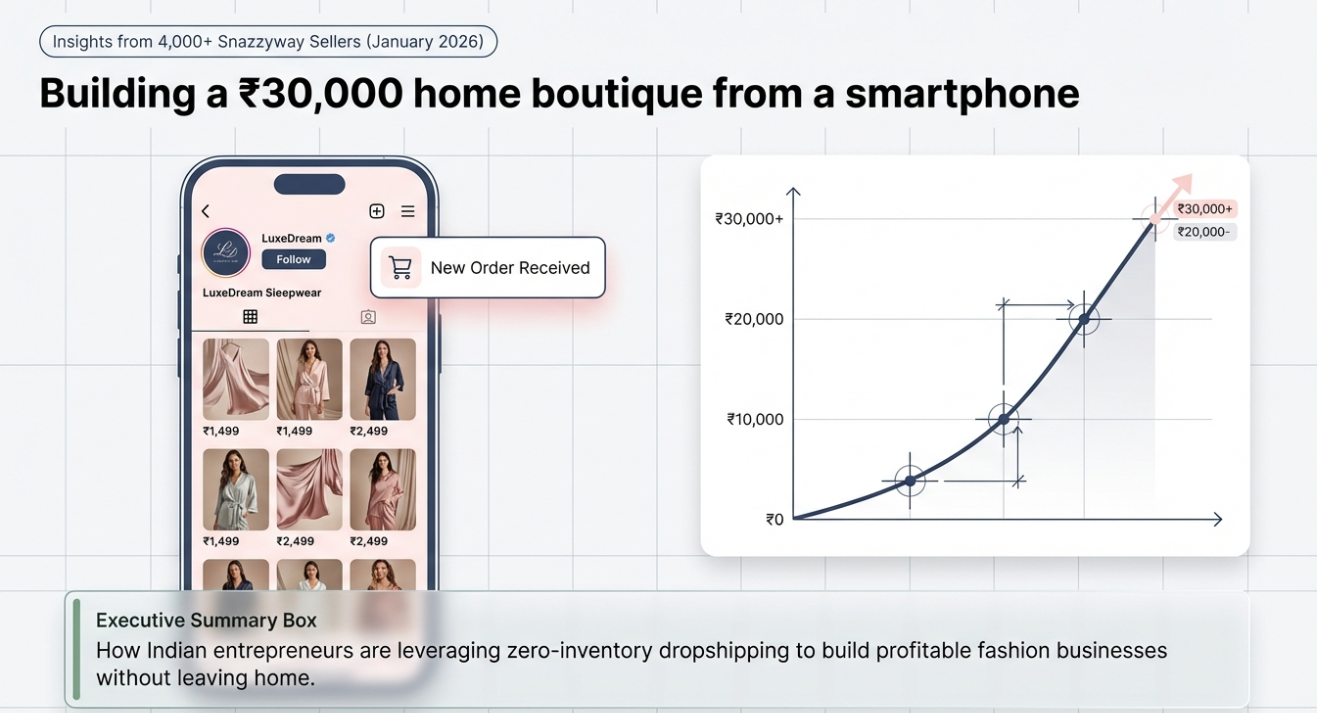
How Indian Housewives Are Earning ₹30,000 a Month Selling Online From Home
Mar 30, 2026
Why Women Fashion Is the Best Category to Sell Online in India Right Now
Mar 24, 2026